

5 Things We Learned This Week - 4/20/2025

April 19, 2025
The S&P 500 declined 1.5% this week. The Bloomberg Aggregate Bond Index gained 0.9%, Gold rose 2.8%, and Bitcoin rose 1.2%.
In a holiday shortened week, the NAHB Housing Market Index reported slight increases in Current Sales Conditions and Buyer Traffic, while Sales Expectations fell 4 points to their lowest since November 2023. Meanwhile, Building Permits edged up but were still 0.2% lower than a year ago. Initial jobless claims declined to 215,000, indicating the labor market remains sturdy for now.

The S&P 500 Is Probably In A Bear Market
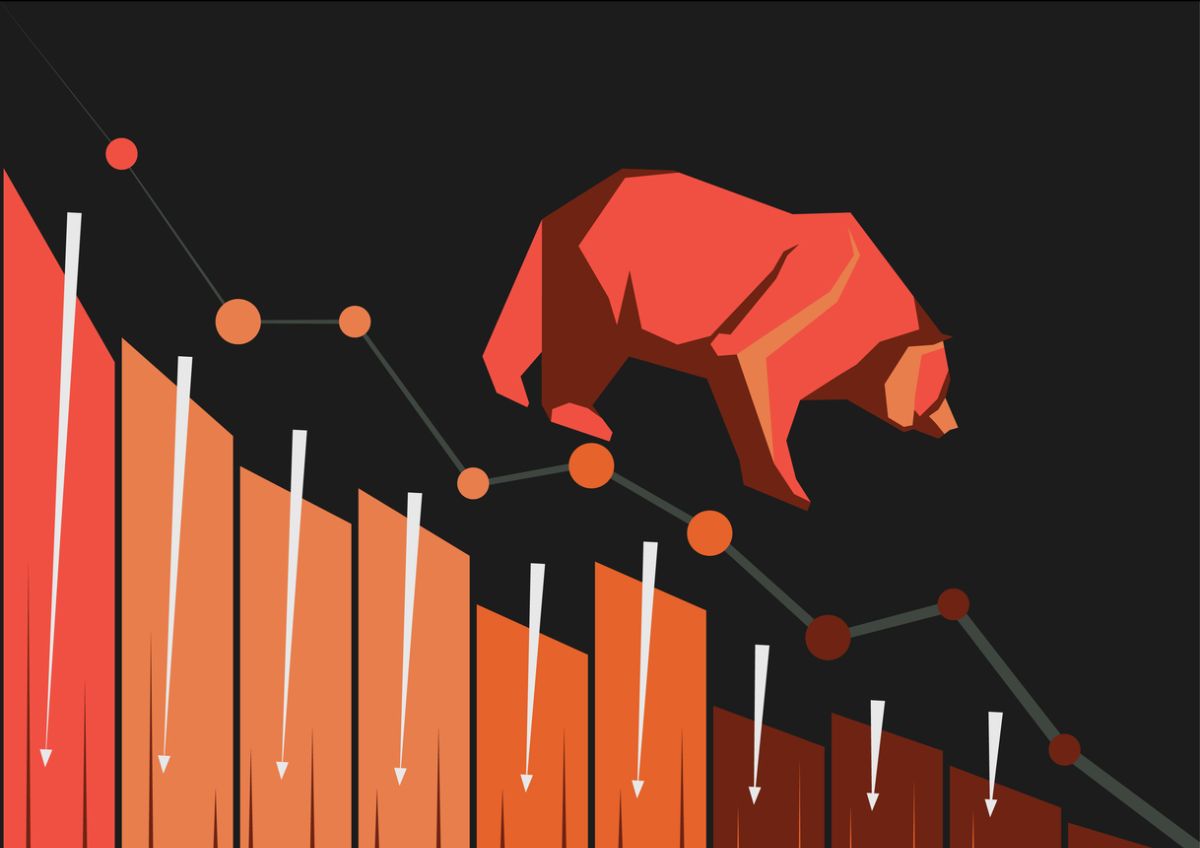
On February 17, Michael Cannivet gave a talk at the Las Vegas MoneyShow titled, "How to Hedge the Next Bear Market." Two days later, the S&P 500 topped at 6,144. Since then, the peak to trough decline has been almost 20%. This probably marked the end of the US equity bull market.
In mid-February, many of the classic preconditions for a bear market were already evident. The S&P 500 had an active monthly DeMark 13 sell signal, earnings momentum had begun to decelerate, forward P/E ratios were back near tech bubble levels, market leadership was hyper-concentrated in a narrow group of tech stocks, and liquidity conditions were quietly tightening. Add to that a weakening consumer, declining breadth, and rising geopolitical risk, and the setup became clear: risk was priced for perfection.
Silverlight proactively hedged in February by raising cash and rebalancing toward lower volatility stocks. Those early moves shielded clients from most of the year-to-date damage. What's next? The S&P 500 is oversold and could stage a bounce next week. However, earnings season is approaching, and earnings expectations are too high. Tariff uncertainty will probably result in earnings misses and guidance cuts. A US recession has probably already begun, and the final bottom in US equities will probably occur later this year.
Large-cap US equities are vulnerable to more downside because they are expensive, over-owned, and domiciled in the wrong currency. The dollar is being pressured lower in 2025, and that will likely continue due to the trade war as foreign investors reallocate capital flows to other countries. Silverlight is underweight US stocks and overweight precious metals, Bitcoin, and international shares. These are all weak dollar beneficiaries that could potentially earn positive returns even if US stocks continue to slide.

Bullish Brazil

A bear market in a really big category like the S&P 500 can create bull markets in a variety of smaller categories. When money leaves one place, it doesn't disappear—it travels to new places with superior macro tailwinds. Silverlight believes the current bear market in US assets is about to spawn a major new bull market in emerging markets.
As money flees the US amid a weakening dollar and rising protectionism, Brazil stands out as a particularly attractive destination. Brazil's appeal lies in its rich natural resources, including iron ore, soybeans, and oil, positioning it as a key supplier to global markets, notably China. Brazil also maintains a manageable trade surplus with the U.S. and shouldn't see high tariffs.
Demographically, Brazil boasts a youthful population, providing a robust labor force and a growing consumer market. The improving geopolitical climate in Latin America further enhances investor confidence, as regional stability promotes economic growth and integration. Moreover, Brazilian assets are trading at historically low valuations. As the dollar weakens, capital is likely to flow into such undervalued markets, amplifying returns for early entrants. In this shifting global landscape, Brazil offers a beacon for capital seeking growth, stability, and diversification away from traditional markets.

Bullish India

In 1991, India’s balance-of-payments crisis triggered bold economic reforms, unleashing decades of growth and positioning it as a global powerhouse. Today, its dynamic equity market calls to global investors seeking diversification. India’s long-term growth surpasses the U.S., with projected GDP expansion of 6-7% annually through 2030, driven by a youthful population and rapid urbanization. The U.S., by contrast, expects 2-3% growth. India’s diversified sectors—technology, financials, and consumer goods—offer stability compared to the U.S.’s tech-concentrated indices.
The trade war between the US and China enhances India’s allure. As tariffs disrupt Chinese exports, India should gain market share in apparel, pharmaceuticals, and electronics. “India is quietly positioning itself as a manufacturing alternative, leveraging competitive labor costs and trade agreements,” notes The Economic Times. India’s limited dependence on Chinese demand shields it from trade war volatility. Within India’s market, HDFC Bank (HDB) and Dr. Reddy’s Laboratories (RDY) stand out. HDFC Bank, a leading private lender, benefits from India’s rising middle class and digital banking surge, boasting strong loan growth and profitability. Dr. Reddy’s, a pharmaceutical giant, capitalizes on global demand for generics. Dr. Reddy's has robust R&D and a pipeline of future opportunities when popular GLP-1 drugs start rolling off patent.

Gold Has Beat The S&P 500 Over The Last 20 Years
Over the past two decades, gold has beat the S&P 500, delivering a total return of approximately 664% compared to the index's 582% gain. Several factors contributed to gold's ascent.
Periods of economic uncertainty, such as the 2008 financial crisis and the 2020 pandemic, prompted investors to seek refuge in gold, bolstering its value. Additionally, central banks worldwide have increased their gold reserves, further driving demand. Going forward, a new BRICS currency tied to gold and commodities could leverage gold’s stability as a hedge against inflation and currency devaluation. As fiat currencies face pressures from overly expansive monetary policies, gold offers a tangible store of value. Its non-correlation with traditional asset classes also enhances portfolio diversification. While gold doesn't yield dividends, its capital appreciation over the past 20 years underscores its merit as a strategic investment. In America, Costco will probably keep selling a ton of gold bars, while in Asia many citizens are fervently diversifying into gold to escape a falling Chinese yuan. Investors seeking to balance risk and preserve wealth should consider adding gold to a diversified portfolio.

Elephants Know How To Risk Manage An Earthquake

When a 5.2-magnitude earthquake rattled Southern California on April 14, the African elephants at the San Diego Zoo Safari Park sprang into action. As the ground shook, three adult elephants instinctively formed an “alert circle” around two calves, shielding them from potential threats. This remarkable display, captured on video, showcases the profound intelligence and social cohesion of elephants, who sense seismic vibrations through their feet and communicate via infrasonic rumbles.
Elephants’ protective instincts mirror other species. These behaviors that transpire in the Animal Kingdom offer a lesson for humans navigating sudden crises—whether they be natural disasters or market shocks. In an unpredictable world, resilience lies in community and preparedness.
This material is not intended to be relied upon as a forecast, research or investment advice. The opinions expressed are as of the date indicated and may change as subsequent conditions vary. The information and opinions contained in this post are derived from proprietary and non-proprietary sources deemed by Silverlight Asset Management LLC to be reliable, are not necessarily all-inclusive and are not guaranteed as to accuracy. As such, no warranty of accuracy or reliability is given and no responsibility arising in any other way for errors and omissions (including responsibility to any person by reason of negligence) is accepted by Silverlight Asset Management LLC, its officers, employees or agents. This post may contain “forward-looking” information that is not purely historical in nature. Such information may include, among other things, projections and forecasts. There is no guarantee that any of these views will come to pass. Reliance upon information in this post is at the sole discretion of the reader.