


5 Things We Learned This Week - 5/24/2026
May 24th
The S&P 500 gained 1.0% this week. The Bloomberg Aggregate Bond Index gained 0.4%, while Gold fell 1.1% and Bitcoin fell 1.3%.
Markets closed higher again. The S&P 500 has risen for eight weeks in a row, the longest bullish streak since December 2023. May flash Manufacturing PMI surprised sharply at 55.3, a 48-month high and well above the 53.8 consensus. Services softened to 50.9. Jobless claims hit a multi-month low. Nvidia delivered. With Brent near $103, roughly $40 above year-ago levels, headline CPI is set to reaccelerate.

What We Were Working On While "On Break"

We owe you an explanation for the radio silence.
5 Things has been quiet for about a month because we were building something we think changes how we manage money. It's called SilverSignal.
Here's a brief recap on how we got here: Two Silverlight strategies, Core Equity (since 2013) and Dobermans of the Dow (since 2022), each rank in the top 1% of their peer universe for cumulative alpha. The technical timing rules Michael developed and utilized over the last thirteen years did most of that heavy lifting, especially as the passive machine pushed fundamentals out of the driver's seat.
Matt Barkley has come a long way since leaving football two years ago. He's now really skilled at building quantitative trading models. Matt recently deployed a team of AI agents to study all of Michael's trading rules, optimize the best combination of factor scores, and distill the result into a single 0 to 100 score. The model reads trend formation, exhaustion, momentum, and volume across daily, weekly, and monthly time horizons. Every stock gets a number. Higher is better. Lower is a warning.
The backtested forward returns for SilverSignal are the strongest of any model we've built. The signal works with remarkable consistency across the Dow, S&P 500, mid-caps, and small-caps.
What it means for you: SilverSignal will be integrated into all of our actively managed strategies, and we are rolling out new ones. First up is a 130/30 long/short equity strategy for qualified investors.
Jesse Livermore said the big money was never in reading the tape. It was in sizing up the trend. We just built a better way to do that.
Good to be back.
Past performance does not guarantee future results. Backtested results are hypothetical.

A Cautionary Tale About The Coming IPO Wave

In 1999, Paul Tudor Jones stopped watching the tape. He started counting lockup expirations. Every IPO carried a 180-day clock, and he stacked them on a calendar until he saw the wall of forced selling building into Q1 2000. The Nasdaq peaked March 10, 2000.
Tom Lee is now running the same spreadsheet. SpaceX, OpenAI, and Anthropic carry a combined $4 trillion in private valuation, roughly 5 to 7 percent of the S&P 500. When they list, then unlock, an estimated $2 trillion of insider stock becomes tradable.
Two warnings the cheerleaders aren't quoting:
Jay Ritter at the University of Florida has tracked 9,253 IPOs since 1980. They underperform by 3.6 percent per year for five years. 42.6 percent had five-year returns below negative 50 percent.
And the 2021 IPO class? Roughly two-thirds were below offer price by year-end. The Renaissance IPO ETF's five-year return is still negative 7 percent annualized.
These historical returns don't guarantee the mega cap IPOs that are forthcoming will do poorly. Anthropic certainly seems like an impressive company, and we may want to own shares at some point. But we generally avoid buying new IPOs, because common sense tells us that if the insiders who know most about the business think now is a great time to sell, why would we want to be on the other side of the transaction? No thanks. Especially given the historically poor returns of IPOs, as evidenced by Professor Ritter's research.
One move: before you chase any 2026 listing, mark its lockup expiration on your calendar and decide in advance what you'll do when it arrives.

The Borrowing Rate Your Bank Doesn't Want You to Know About

A client called last fall with a real estate opportunity, a short window, and one instinct: sell stock to fund it. We told him to wait. Selling appreciated stock triggers a capital gains bill and pulls money out of a compounding strategy mid-stride. In his case, it was unnecessary. If you hold a non-retirement investment portfolio, you may be sitting on one of the cheapest lines of credit available right now. Here’s how it works.
Through SyntheticFi, you can borrow against your portfolio at a current floating rate of 4.05%. SyntheticFi engineers this favorable rate by constructing a box spread, a combination of options trades executed on a listed exchange like the Cboe®, directly inside your existing brokerage account. This creates a synthetic loan where market participants compete to lend, driving rates near benchmark levels (such as SOFR) plus only about 25 basis points. The result is a transparent, institutional-grade structure with no large bank markups and interest treated as a capital loss for tax purposes. That compares to a national average HELOC of 7.2% and Schwab Pledged Asset Lines running roughly 5.9%–7.9% at current SOFR.
The mechanics are simple: borrow up to 50% of your portfolio with no use restrictions, interest-only payments, no maturity date, one DocuSign, and cash available the next business day. Minimum draw is $10,000. SyntheticFi typically earns a spread of around 25 basis points on these loans. Silverlight makes no commission or revenue from referring clients to this program, but we are happy to help facilitate loans on our clients’ behalf if they are interested in getting quotes. If you have appreciated stock and a near-term capital need, reach out before you sell anything. Your portfolio may already be your cheapest bank.

Costco Thesis To Own
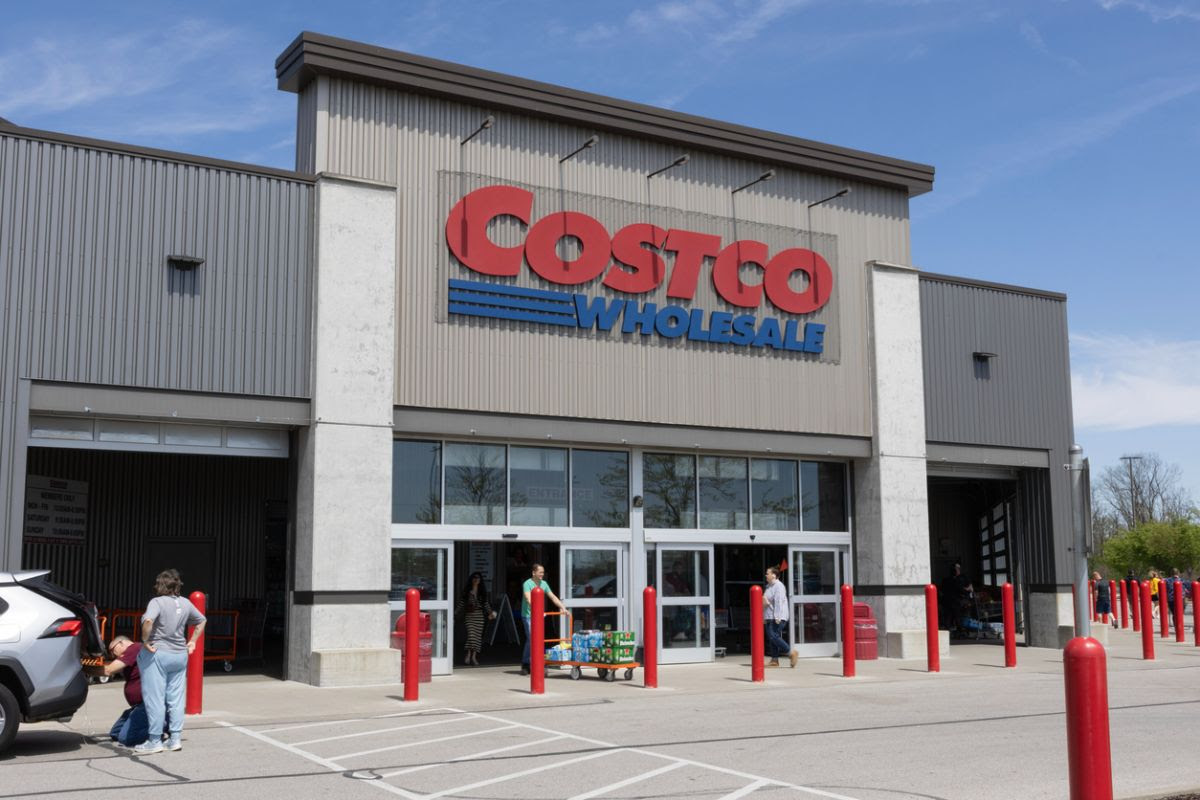
On September 15, 1983, the first Costco warehouse opened on 4th Avenue South in Seattle. The pitch was straightforward and slightly insulting to anyone who'd grown up in retail: charge people a membership fee for the privilege of shopping at your store. That insult became the most durable competitive moat in modern retail.
Costco isn't a retailer. It's an annuity that happens to sell rotisserie chickens.
Membership renewal rates have held above 90% in the U.S. for more than a decade. Membership fees account for 65 to 73 percent of total operating profit, which means the merchandise is essentially sold at cost and the entire profit stream is a recurring subscription paid by 75 million households who don't think of themselves as subscribers. That's not consumer staples territory. That's software territory.
The forward valuation multiple reflects it. Costco trades at a premium to every traditional retailer because the cash flow behaves like software. Earnings have compounded at a consistent double-digit rate for years, and the 13.6% growth in membership fee revenue reported in Q2 2026 suggests no deceleration.
We also like the setup from a timing perspective. Costco is rated a Strong Buy by our new SilverSignal model, which makes sense given the macro backdrop. When inflation rises, people hunt for value. With many economic forecasters projecting Q2 2026 CPI approaching 6%, Costco's value proposition gets more compelling. The shares are not particularly cheap, but durable earnings streams are worth more in the present environment while so many other companies are more vulnerable to inflation and AI disruption threats. Costco isn't going anywhere, and that's why Silverlight is long Costco in client portfolios.

Kids Remember Vacations More Than We Think

Summer is almost here. Somewhere on your calendar may be a child between five and ten you love. Take them somewhere this year. Even if the budget is small. Even if the trip is short. The vacations you take with a child in this window are the ones their brain will hold onto for life.
This week on X, an account posted a single line that caught our attention: "Study shows the most unforgettable childhood memories are family vacations between ages 5 to 10.”
Turns out, that's right. A Harris Interactive survey of 2,500 adults for the U.S. Travel Association found that 62% of respondents said their earliest memories were family vacations between ages 5 and 10. Half called those memories "very vivid," sharper than school events (34%) or birthdays (31%).
Takeaway: The brain remembers the trip to the lake more clearly than the trip to the cake.
The reason why 5 to 10 is such an important age range for a child relates to biology. In this window the hippocampus matures, the prefrontal cortex starts organizing experience into narrative, and the child is forming a self the brain wants to anchor. Trips taken during this time matter a lot because novelty releases dopamine, the brain's "save this" signal. Researchers call it the foundation of the reminiscence bump, the lifetime peak of vivid memory.
Five ways to leverage brain science to make a summer trip stick:
1. Novelty over luxury. First canoe at a state park beats a fifth visit to a five-star resort. Pick the one thing this child has never seen.
2. One sensory anchor. A campfire. A local food. Cold water. Pick it before the trip and protect it on the schedule.
3. Let the child choose. Two small decisions, one activity and one meal. The trip becomes theirs.
4. Subtract screens, add grandparents. Three generations at full attention is rare and powerful.
5. Tell the story afterward, on purpose. The retelling helps anchor the memory forever.
Pick the kid. Pick the place. Block the week. You were five through ten once. Remember when the world felt new and exciting? Someone made time to create a magical experience for you. Now you get to be the one who makes the time.
This material is not intended to be relied upon as a forecast, research or investment advice. The opinions expressed are as of the date indicated and may change as subsequent conditions vary. The information and opinions contained in this post are derived from proprietary and non-proprietary sources deemed by Silverlight Asset Management LLC to be reliable, are not necessarily all-inclusive and are not guaranteed as to accuracy. As such, no warranty of accuracy or reliability is given and no responsibility arising in any other way for errors and omissions (including responsibility to any person by reason of negligence) is accepted by Silverlight Asset Management LLC, its officers, employees or agents. This post may contain "forward-looking" information that is not purely historical in nature. Such information may include, among other things, projections and forecasts. There is no guarantee that any of these views will come to pass. Reliance upon information in this post is at the sole discretion of the reader.