


5 Things We Learned This Week - 2/8/2026
February 8, 2026
The S&P 500 fell 2.0% this week. The Bloomberg Aggregate Bond Index fell 1.0%, while Gold declined 2.1% and Bitcoin rallied 3.8%.
January PPI surprised to the upside, with wholesale prices rising faster than expected, underscoring sticky pipeline inflation. ISM manufacturing stayed in expansion territory with a bump higher in New Orders. The February jobs report disappointed, showing a decline of 92,000 jobs and an uptick in unemployment to 4.4%. Retail sales softened, falling 0.2%, hinting that the consumer is beginning to wobble.

Gold And Silver Crashed, Now Volatility Is Spreading
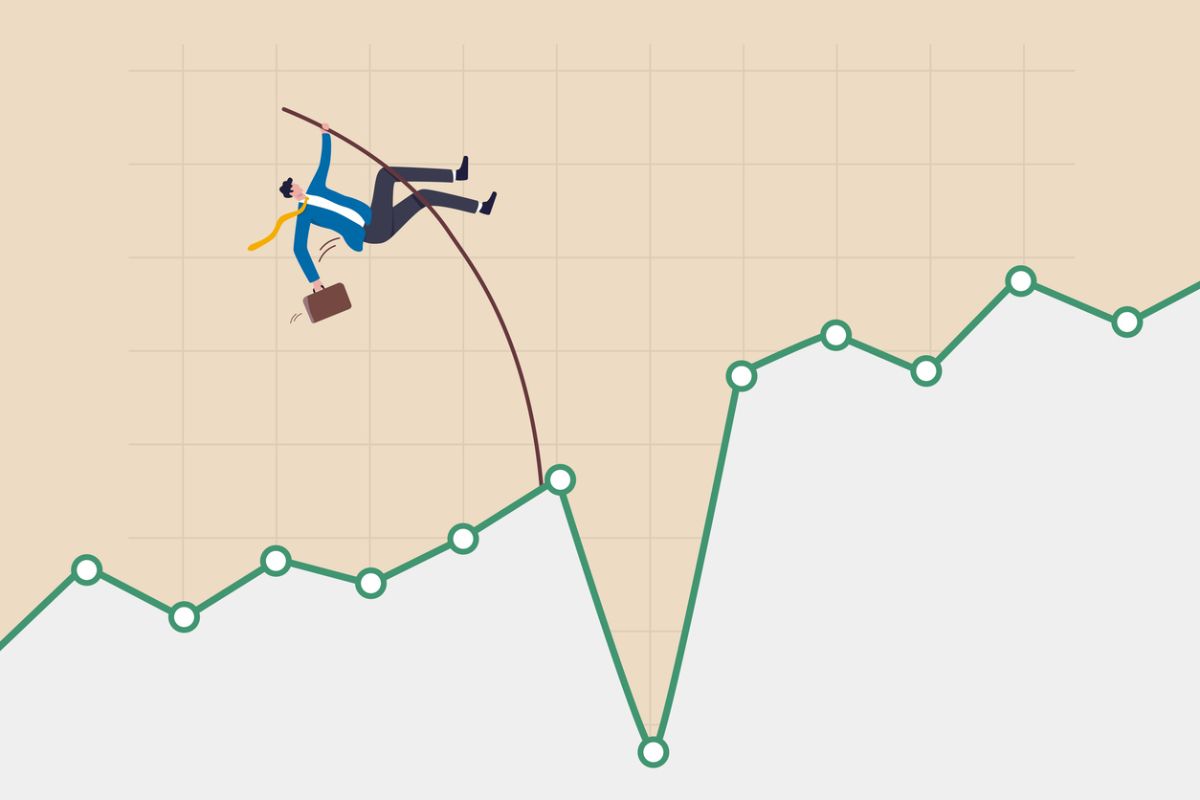
Two weeks ago, we said it was time to take profits in precious metals. We sold it all. A few days later, we were very glad we made that decision.
The following week, Gold suffered its sharpest one-day decline since the early 1980s, and Silver collapsed into the mid-$70s—a nearly 40% drawdown that fits the classic “blow-off” pattern seen at emotional extremes in prior bull markets.
The setup before the selloff was textbook. One-month gains north of 30%, multi-decade-high volatility, and nearly unanimous bullish sentiment. In that kind of tape, there is little margin for error. When the CME raised margin requirements a few weeks ago, it also set up a unique trading environment where leveraged longs were forced to post capital or sell. Thin liquidity did the rest.
Bitcoin is also down sharply from its highs. We fortunately started booking profits in Q4. We currently have zero crypto exposure. The problems overhanging Bitcoin are different than those plaguing precious metals, but one key driver for both asset classes is a steadying dollar. We think the dollar will continue to decline over the secular horizon, but oversold conditions may lead to a bounce.
Meanwhile, volatility is also picking up in the stock market. High-beta software stocks are in a full fledged bear market. And many popular retail stocks Robinhood traders love have fallen sharply. When volatility starts rising across multiple asset classes like it is now, capital preservation takes precedence. For us, that means migrating from higher beta stocks to lower beta issues. We also raised enough cash in Silverlight's managed portfolios to provide a cushion if the recent bout of volatility continues to build. Patience is key in a market like this, but it probably won't take very long to figure out the intermediate-term direction.

Anthropic Rolls Out New Products That Rock Wall Street

This week’s market tremors didn’t come from earnings misses or rate-hike fears — they came from AI. When Anthropic rolled out significant updates to Claude Cowork and other agentic features, software and professional-services stocks cratered as investors suddenly confronted a stark new threat to revenue streams and pricing power. The powerful new plugins — capable of automating tasks once sold as high-margin SaaS services — prompted a broad sell-off across legal, data, and enterprise software names, erasing hundreds of billions in market value in a matter of days.
Behind the market rout lies a deeper concern: the very role of labor in a world powered by frontier AI. Anthropic CEO Dario Amodei has been unusually candid about the coming economic shake-up, warning that AI could disrupt jobs faster than any prior technology cycle and potentially eliminate a substantial share of entry-level white-collar roles, with knock-on effects for unemployment, consumption, and social stability.
For investors, there is a possibility the labor market transformation becomes a Black Swan event. This means it's important to watch jobs data closely. If AI accelerates job displacement faster than retraining and demand creation, we may see negative impacts on economic growth, consumer spending, and risk assets well beyond the tech sector. On the other hand, tech revolutions also normally create new jobs that didn't previously exist, so it's important to also be open-minded. There is also a possibility that AI will improve productivity enough to keep GDP growing strongly even if the normalized unemployment rate ticks up. Corporate profits are the key, and we will continue to report on labor market trends as they evolve.

You Never Go Broke Taking Profits
An old trader once told us his favorite sell signal was feeling smart. When your portfolio starts flattering your ego, it’s usually a good time to trim. That wisdom matters today, because stocks are up a lot and showing some early warning signs of potential trouble ahead.
A large share of the modern stock market isn’t driven by humans weighing fundamentals. It’s driven by systematic strategies—trend-following CTAs, volatility-control funds, risk-parity models—that respond to price, volatility, and liquidity alone. They don’t ask why something is happening. They simply react. Uptrend? Buy. Downtrend? Sell. Rinse and repeat.
Currently, the systematic positioning setup is bearish. Major stock indexes have declined past key short-term triggers that force CTAs to sell regardless of headlines or earnings. Going forward, even if we see a flat or rising market, these funds are projected to reduce equity exposure. Layer on thinning liquidity, elevated investor stress, and a shift by options dealers from stabilizing “long gamma” positions to destabilizing “short gamma,” and we have a market that can slide faster than most expect.
According to Goldman Sachs Group Inc.'s trading desk, a renewed market decline could trigger about $33 billion of systematic selling pressure this week. If the selloff continues and the S&P 500 falls below 6,707, it could unlock up to $80 billion of additional systematic selling over the next month. In a flat market, CTAs are projected to sell about $15.4 billion of US equities this week. And even if stocks rise, the funds are expected to shed about $8.7 billion.
None of this analysis means the market will definitely slide from here. Nor does it mean we're entering a bear market. However, the systematic setup does indicate that we've entered a slippery time in the market, and in these environments risk can happen fast. Therefore, we decided to sell or trim a variety of portfolio winners this week.
You never go broke taking profits, but plenty of investors go broke giving them back.

McCormick Thesis To Own
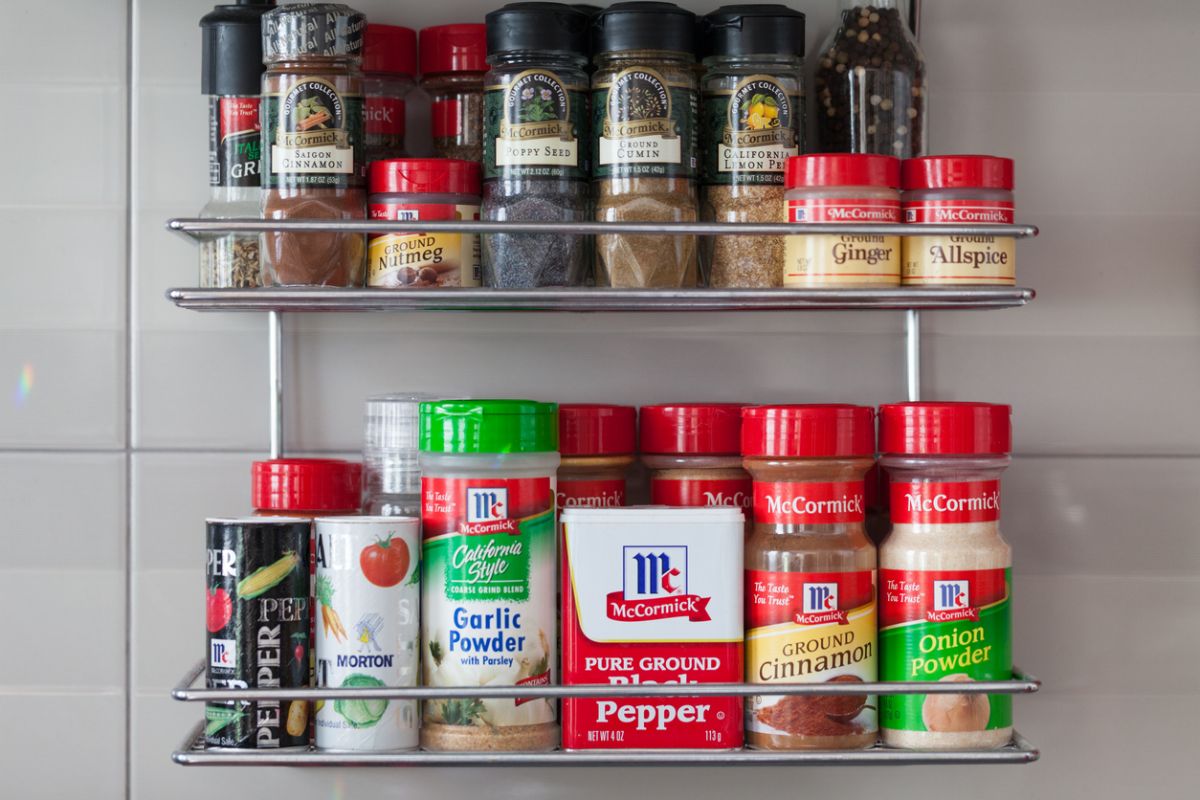
Of all the stocks out there, why invest in a boring company like McCormick & Co.? Because in some trading environments, boring is beautiful.
When macro uncertainty rises, money rotates toward defensive cash-flow machines that can grind out earnings regardless of the economic backdrop. Consumer staples fit that bill, and you can already see it in the tape. Year to date, the Consumer Staples sector is up 14.2%, while Consumer Discretionary is down 2.9% and the S&P 500 is up 1.4%. As volatility has risen amid selloffs in things like silver and tech stocks, staples have quietly started to outperform.
McCormick is a classic blue-chip consumer staple name. The company has nearly 20% share of the 16.5 billion dollar global spices and herbs market—four times its next-largest branded peer. It also has a growing portfolio in sauces and condiments. Its dominance in both branded and private-label spices, deep retailer relationships, and sturdy cost edge give it a wide moat built on scale, switching costs, and hard-to-replicate R&D and consumer insights.
Despite all of these excellent business qualities, McCormick now trades near its 52‑week lows, and shares are more than 2-sigma cheap on an Est. EV/EBIT basis (16.8x vs. 22.9x for trailing 5-year avg.). The stock offers investors a 3% dividend yield that will probably grow by about 5% annually. The stock could also outperform on valuation re-rating. We think the market is over-discounting near-term cost and tariff headwinds and underpricing long-term, mid-single-digit sales growth and margin expansion potential.
Finally, we like the timing. MKC has been washed out after a long derating. We recently noticed a cluster of short and long-term technical buy signals, and we think the stock has a favorable risk/reward skew from here. MKC shares were recently added to Silverlight managed portfolios.

Acing Life After An Accident

On a crisp morning at Overstone Park in Northamptonshire, a lone golfer stood on the tee of a modest 120-yard par-3. No gallery. No fanfare. Just a man, a seven-iron, and a calm breath before the swing.
The ball rose cleanly into the pale English sky, landed softly on the green, took one deliberate bounce, and disappeared into the cup.
A hole-in-one.
For most golfers, that’s a once-in-a-lifetime moment—an outcome with odds hovering around one in 100,000. But statistics alone don’t explain why this shot mattered so much more.
The golfer was Patrick Duke. He was 67 years old. And he had only one arm.
In 2012, Duke’s life fractured in an instant. A workplace accident in the road-surfacing industry caught his jacket in heavy machinery and severed his arm. What followed wasn’t just physical loss, but psychological free fall—PTSD, depression, and suicidal thoughts. A man who once defined himself through movement and competition—rugby, Gaelic football, soccer, cricket—suddenly felt disconnected from his body, his confidence, and his purpose.
For years, Duke drifted.
Then, in 2018, a friend made a simple suggestion: try golf.
It didn’t sound revolutionary. But sometimes the smallest invitations open the biggest doors.
Working alongside PGA professional Brian Mudge, Duke began the painstaking process of relearning what balance, rhythm, and control meant—this time with a single arm. There was no template. No instruction manual. Just experimentation, patience, and a willingness to look foolish before looking competent.
Golf became more than a sport. It became a structure. A reason to show up. A place where progress was measured not by perfection, but by presence.
Through the game, Duke found community. Friendship. Belonging. And slowly, something deeper returned.
“Golf gave me the will to live,” he says.
Duke exemplifies what happens when someone refuses to let their worst chapter define the ending. He didn’t get his old life back. He built a new one. Different. Harder. And, in many ways, richer.
We often talk about resilience as if it’s loud and dramatic. But more often, it’s quiet. It looks like showing up again. Trying something new when confidence is gone. Trusting that meaning can still be found, even if the path looks nothing like the one you originally imagined.
This material is not intended to be relied upon as a forecast, research or investment advice. The opinions expressed are as of the date indicated and may change as subsequent conditions vary. The information and opinions contained in this post are derived from proprietary and non-proprietary sources deemed by Silverlight Asset Management LLC to be reliable, are not necessarily all-inclusive and are not guaranteed as to accuracy. As such, no warranty of accuracy or reliability is given and no responsibility arising in any other way for errors and omissions (including responsibility to any person by reason of negligence) is accepted by Silverlight Asset Management LLC, its officers, employees or agents. This post may contain “forward-looking” information that is not purely historical in nature. Such information may include, among other things, projections and forecasts. There is no guarantee that any of these views will come to pass. Reliance upon information in this post is at the sole discretion of the reader.