


5 Things We Learned This Week - 4/13/2026
April 13, 2026
The S&P 500 rose 3.6% last week. The Bloomberg Aggregate Bond Index rose 0.1%, Gold rose 1.8%, and Bitcoin rallied 9.5%.
March CPI rose 0.9% in a single month—the biggest jump since June 2022. Gasoline prices drove almost all of it, skyrocketing 21% (the largest monthly surge on record). Core CPI, which excludes food and energy, rose a modest 0.2% that month and 2.6% over the year, showing inflation remains mostly a supply shock rather than demand-driven. Consumer sentiment hit a record low in April, and one-year inflation expectations jumped from 3.8% to 4.8%. Fed minutes released this week revealed more officials now see possible rate hikes.
President Trump announced a U.S. naval blockade targeting traffic linked to Iranian ports in the Strait of Hormuz following failed talks with Iran, escalating an already restricted flow through the waterway. Analysts question whether a full blockade of the strait is either feasible or likely to be enforced in practice. While tensions may eventually ease, the risk of a sharp escalation remains.

The AI Layoff Trap

A new paper out of Penn and Boston University, published last month and now circulating widely in macro circles, contains one of the more unsettling economic arguments we've read in years.
The thesis: AI-driven layoffs are a Prisoner's Dilemma. Every firm rationally must automate — because if they don't, a competitor will, undercutting their prices. But when all firms automate simultaneously, the workers they lay off are also the consumers who buy their products. Demand erodes. The paper's math shows this isn't a transfer from workers to shareholders. It's a deadweight loss that hurts both. A Duke CFO survey from March 2026 projects roughly 502,000 AI-attributed job cuts this year — approximately nine times the 55,000 estimated for 2025. Block has already cut nearly half its workforce. Salesforce replaced 4,000 customer service agents with AI. Goldman Sachs deployed a system where one engineer can do the work of five.
The bearish case is real, yet the history of technological disruption also counsels humility about projections. The WEF estimates AI will displace 85 million jobs globally while creating 97 million new ones. The transition period is the hard part. Researchers at Boston University found that software developer employment actually increased by 400,000 since ChatGPT launched, because AI raises demand for the underlying software. New roles like AI trainers, prompt engineers, and workflow architects didn't exist five years ago. We are cautious on the economic outlook because the layoff math is happening faster than the job creation math, but we're open to upside surprises.

The Most Anxious Americans in 74 Years

Somewhere in suburban Ohio this week, a woman named Karen stopped filling her gas tank before it was full. Not because she was in a hurry. Because she couldn't afford to finish.
She's not alone. The University of Michigan Consumer Sentiment Index for April came in at 47.6 — a number so low it has no precedent in the survey's 74-year history. Not during the 2008 financial crisis. Not during the COVID lockdowns of March 2020. Not even during the 1970s stagflation that defined a generation of economic anxiety. The lowest reading before this was 50, set in June 2022. This week shattered it.
The reasons aren't complicated. Gasoline is up 21% in a single month. The Iran war has made everyday energy costs feel like a tax no one voted for. One-year inflation expectations jumped from 3.8% to 4.8% in a single month — the largest one-month leap since April 2025. Assessments of personal finances fell. Buying conditions for cars and durable goods deteriorated further. The decline was uniform across age, income, education, region, and political party. When a reading lands that broadly, it isn't noise.
Here's the part that surprises most investors: extreme lows in consumer sentiment have historically been followed by strong stock market returns. According to JPMorgan Asset Management, the average S&P 500 return in the 12 months following a sentiment trough is approximately 24.9%. When everyone already feels terrible, there's only one direction for sentiment to go. Markets often anticipate the turn before consumers do. Consumer sentiment tends to track the stock market, not lead it, which is why it isn't always a reliable early recession warning on its own.
The indicator we're watching more closely is the employment market. Initial jobless claims, currently running around 215,000–240,000 per week, remain elevated but not yet at recessionary levels. The 300,000 weekly claims threshold is the trip wire. Historically, it's accelerating layoffs that predict recessions. A rattled consumer can recover quickly once gas prices ease, but a labor market that starts spiraling is a different problem entirely. We'll be watching claims every Thursday.

Brazil: The Asymmetric Bet the World Is Finally Pricing

Brazil is the only large democracy in the world that is simultaneously a food superpower, a water superpower, an energy superpower, a mineral superpower, and a carbon superpower—with export routes that are open and flowing. This positions Brazil strongly in a world where the Strait of Hormuz is effectively closed.
While Middle Eastern energy flows have been disrupted, Brazil has continued to produce and export from deepwater Atlantic fields that require no Gulf transit, no Persian Gulf security umbrella, and no tolerance for geopolitical risk. The world is relearning the value of geography, and Brazil's geography is nearly unmatched.
The market is starting to price it. The Ibovespa hit a record high last week, with more than R$20 billion in foreign capital flowing into Brazil so far this year — already surpassing all of 2025's inflows. The Brazilian real has risen close to a two-year high, supported by one of the widest interest rate differentials in the world: Brazil's Selic rate sits at 15%, versus the Fed's 3.75%. That carry trade is a powerful anchor for Brazil's currency. Despite the rally, Brazilian equities remain significantly cheaper than U.S. stocks. The Ibovespa trades at roughly 14x earnings, compared to the S&P 500's Shiller CAPE of 36. Even after a 50% gain from the lows, investors are not being asked to pay an expensive price for a world-class macro story.
The long-term technical picture confirms the fundamental thesis for Brazil. After years of sideways action that frustrated investors and kept institutional allocations low, the Ibovespa has staged what appears to be a genuine structural breakout to all-time highs. Silverlight is long Brazilian equities in managed portfolios and views the current setup as one of the more compelling geographic tilts available in a market where U.S. valuations offer little margin for error.

Petrobras Thesis To Own
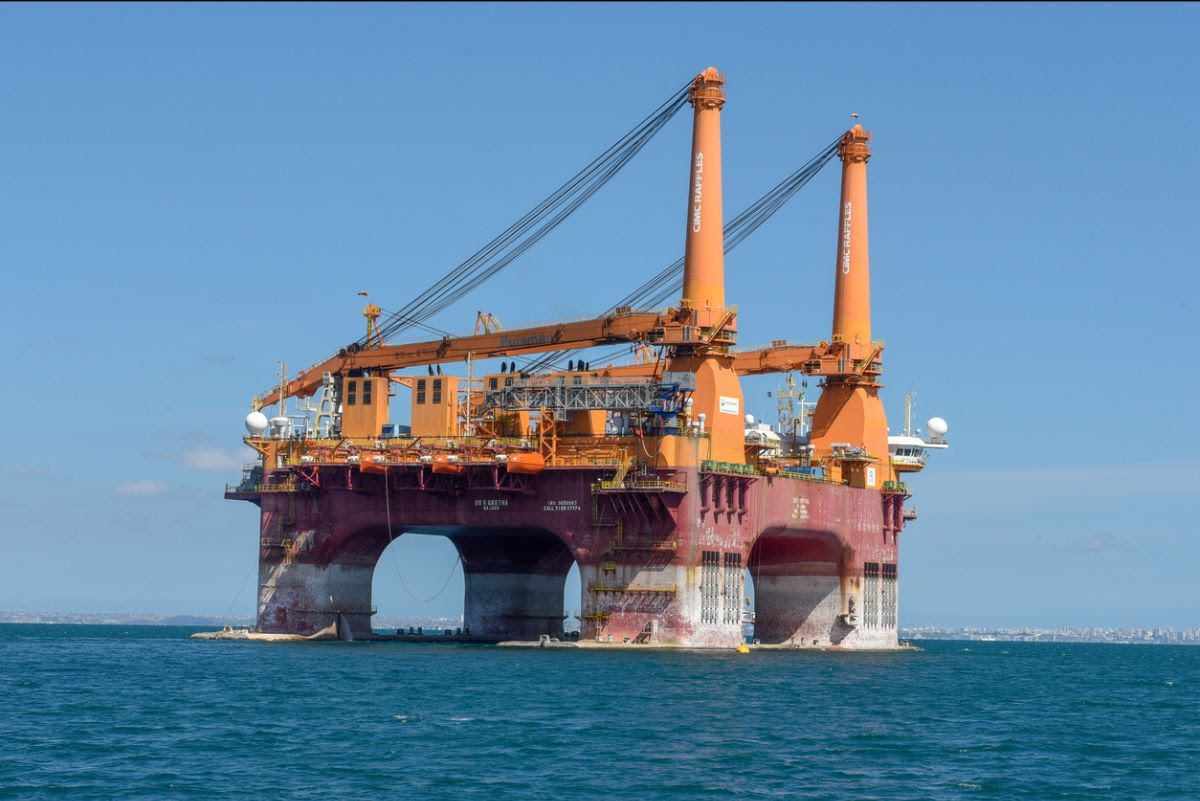
Most investors looking for energy exposure start with the obvious names — Exxon, Chevron, ConocoPhillips. Those are fine companies. But while the crowd looks north, one of the most compelling risk-reward setups in global energy sits 4,000 miles to the south, beneath the Atlantic Ocean off the coast of Brazil.
Petrobras (PBR) operates one of the most prolific offshore drilling program in the world. Its pre-salt reservoirs have driven Brazilian oil production to a record 5.3 million barrels of oil equivalent per day, with pre-salt fields accounting for over 80% of output. The breakeven cost on these assets is often below $40 per barrel. At $100+ Brent, the profitability math is staggering.
The Iran war makes PBR's geography a strategic asset. Petrobras produces entirely in the Western Hemisphere, completely insulated from Strait of Hormuz disruption. When Middle Eastern supply is cut off, the world needs oil from somewhere else. Brazil is that somewhere else. Analysts estimate every $10 increase in Brent crude generates $4–5 billion in additional annual free cash flow for Petrobras. With Brent above $100, the company is tracking toward roughly $28 billion in free cash flow this year—approximately 25% of its current market cap returned to shareholders in a single year.
The valuation is difficult to argue with. PBR trades at roughly 6x forward earnings and 4.3x EV/EBITDA, a steep discount to integrated oil major peers. The dividend yield is near 7%. The company's $109 billion capital plan through 2030 is funded almost entirely by internally generated cash. Production is growing, with output expected to reach 4.2 million barrels per day by 2028.
One risk deserves plain acknowledgment: Petrobras is 37% owned by the Brazilian government, which has historically used the company to subsidize domestic fuel costs at the expense of shareholders. That risk appears contained under current management and policy, but it is never entirely off the table. For those willing to accept that dynamic, PBR offers something rare in today's expensive market: a world-class asset, priced for pessimism, at the exact moment the world needs what it produces most. Silverlight recently added more PBR to managed accounts.

The Ocean Doesn't Care How Old You Are

On September 2, 2013, a 64-year-old woman staggered out of the water at Key West, Florida, having just swum 110 miles from Havana, Cuba. No shark cage. No wetsuit. Open ocean for 53 hours straight.
Her name was Diana Nyad. She had first attempted the swim in 1978, at age 28. She had been one of the greatest marathon swimmers in the world. But Cuba to Florida had beaten her. Strong currents pulled her off course. She stopped after 76 miles, put the dream away, and spent the next 30 years as a sports broadcaster.
At 60, something shifted. She wasn't done.
She tried the swim again in 2010. Box jellyfish stings forced her out of the water. She tried in 2011 and jellyfish foiled her again, plus she had an asthmatic attack in the middle of the night. A fourth attempt in 2012 yielded a similar result.
However, each time Nyad came out of the water, she made notes. She noticed what failed. What the current did. Where the jellyfish were. She had her team design a custom full-body silicone suit and specially coated mask. She studied everything carefully and meticulously adapted her approach.
When she finally reached the beach in Key West and completed her longstanding goal, she said three things: never give up, you’re never too old, and no one does it alone.
Here's what most people miss about this story, though: Nyad didn't simply try harder than everyone else; she tried differently each time. Every failure became research. Every setback was a learning opportunity. There is a huge difference between stubborn repetition and deliberate revision, and Nyad practiced the latter.
Many investors get this wrong. They stubbornly hold losing positions to avoid admitting they’re wrong—not because the thesis still works.
On the other hand, many people also tend to abandon their life goals too early—not because the goal is flawed, but because their first approach failed.
Nyad offers a better framework: keep the destination steady and the path flexible.
When you hit a wall—in your portfolio, career, or relationships—you have two bad instincts to fight: quit too early or push harder on a broken strategy. There’s always a better question: What failed—and what needs to change?
This material is not intended to be relied upon as a forecast, research or investment advice. The opinions expressed are as of the date indicated and may change as subsequent conditions vary. The information and opinions contained in this post are derived from proprietary and non-proprietary sources deemed by Silverlight Asset Management LLC to be reliable, are not necessarily all-inclusive and are not guaranteed as to accuracy. As such, no warranty of accuracy or reliability is given and no responsibility arising in any other way for errors and omissions (including responsibility to any person by reason of negligence) is accepted by Silverlight Asset Management LLC, its officers, employees or agents. This post may contain "forward-looking" information that is not purely historical in nature. Such information may include, among other things, projections and forecasts. There is no guarantee that any of these views will come to pass. Reliance upon information in this post is at the sole discretion of the reader.