


5 Things We Learned This Week - 8/17/2025
August 17, 2025
The S&P 500 rallied 1.0% this week. The Bloomberg Aggregate Bond Index was flat, while Gold fell 1.8% and Bitcoin gained 0.5%.
US retail sales posted solid advances in consecutive months for the first time this year, tempering concerns of a slowdown in spending. Meanwhile, inflation pressure is rising again, consistent with our forecast for a rebound in the second half of 2025. The Core CPI report rose from 2.9% to 3.1%, while the Producer Price Index came in even hotter rising 3.7%. PPI is a leading indicator of consumer inflation, so we should expect to see higher prices in the coming months. China's economy slowed across the board in July with factory activity, investment and retail sales disappointing.

Trump’s Criticism of Powell Raises Questions About Fed Independence
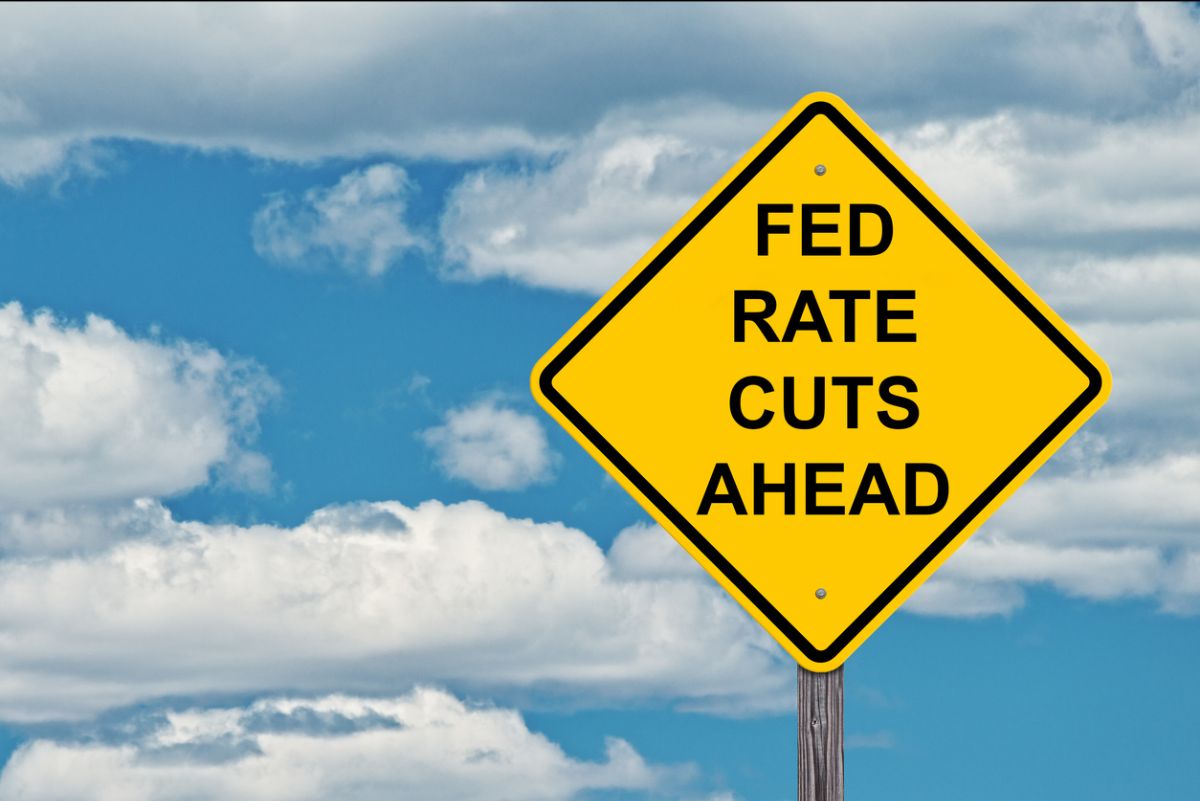
President Trump renewed his attacks on Federal Reserve Chair Jerome Powell this week, blasting him on Truth Social: “Jerome 'Too Late' Powell, a stubborn MORON, must substantially lower interest rates, NOW. IF HE CONTINUES TO REFUSE, THE BOARD SHOULD ASSUME CONTROL, AND DO WHAT EVERYONE KNOWS HAS TO BE DONE!”
Lotta all caps to unpack there...
President Trump has long argued for lower interest rates. The former real estate developer clearly prefers a dovish monetary policy to stimulate growth and weaken the dollar. He's not the first President to advocate for lower interest rates—Ronald Reagan and George H.W. Bush did it too. But Trump is the first U.S. President to lambast a sitting Fed chair so aggressively in full view of the public. Trump probably won't ultimately fire Jay Powell, but he could reshape the central bank by appointing a new Fed chair before Powell's term officially ends next year. That would shift attention away from Powell to the new chair, and convolute the current Fed's messaging.
For now, investors must grapple with the implications of the President's obvious weak dollar bias, because artificially lowering rates normally weakens a country's currency. At Silverlight, we are hedging the probability of future dollar weakness by maintaining exposure to monetary hedges like Bitcoin and Gold. We also have signficant investments in energy and commodity markets we think will outperform in an inflationary world, such as nuclear and copper.
While the lower rates the President is lobbying for might deliver a short-term boost to risk assets, excessively sharp cuts could backfire by reigniting inflation to uncomfortable levels. The inflation reports this week were already above the Fed's 2% inflation target. Cutting rates in the face of that kind of data would also raise serious concerns about the Fed’s independence—long a cornerstone of U.S. financial credibility. History suggests that politicizing monetary policy ultimately hurts the people it’s meant to help, leaving everyday households more vulnerable to inflation shocks and economic instability. An independent Fed matters for everyday citizens because it shields interest rate policy from political cycles, helping ensure things like mortgage rates and the value of savings are managed with the nation's long-term stability in mind rather than election-year expedience.

Why Nuclear Power Equities Are Poised to Shine

A global nuclear renaissance is underway, driven by two powerful forces: soaring energy demand from AI-driven data centers and the urgent need for carbon-free baseload power. Unlike intermittent renewables, nuclear delivers reliable, round-the-clock electricity at scale. Nuclear plants offer one of the lowest cost forms of energy, making them not only efficient but also one of the cleanest pathways to decarbonization.
This backdrop is fueling demand for nuclear-linked equities. Constellation Energy (CEG), America’s largest operator of nuclear plants, is ideally positioned to benefit. With a fleet supplying over 20% of U.S. nuclear capacity, it combines steady cash flow with strong exposure to rising power prices. On the innovation side, Oklo (OKLO) is pioneering advanced small modular reactors designed to bring nuclear’s reliability to smaller grids and industrial applications.
Together, these companies exemplify how investors can tap into nuclear power’s dual advantage: economic efficiency and environmental necessity—an energy transition trend too big to ignore. Silverlight clients are long CEG and OKLO.

Tariff Revenues Surge, But Consumers Could Soon Feel the Pinch

The U.S. is now collecting roughly $30 billion per month in tariff revenue, equal to about $360 billion annually—and August’s tally may come in even higher. With a federal deficit near $2 trillion, tariffs have become a meaningful offset, though still only a fraction of the government’s financing needs.
At current import levels of $3.2 trillion per year, a 15–20% average tariff could imply $480–$640 billion in collections. Yet exemptions and carve-outs bring the realized figure much closer to today’s levels. Importantly, foreign exporters have not absorbed the costs—import prices (pre-tariff) remain flat since April. Instead, U.S. businesses have borne the brunt through margin compression and inventory front-running earlier this year.
That strategy won’t last forever. If tariffs persist, a portion of the burden will inevitably shift to consumers. Like monetary stimulus, the inflationary effects of tariffs hit with a lag—and with household budgets already stretched, higher prices could dampen demand heading into 2026.

Why Airbus Looks Poised for Long-Term Leadership

Airbus is on the verge of eclipsing Boeing’s decades-long record for most-delivered commercial jet, with its A320 family set to surpass the 737 within weeks. That milestone reflects Airbus’s steady rise from underdog to industry leader, and its ability to capture the world’s most important aircraft market: single-aisle jets. The A320neo has become a global workhorse, prized by airlines for fuel efficiency and flexibility, while Boeing’s 737 Max program continues to carry reputational and regulatory baggage after two fatal crashes and a prolonged grounding.
Unlike Boeing, Airbus has the financial strength and discipline to invest in the future. Management is preparing to launch a next-generation narrowbody by the mid-2030s, exploring advanced open-rotor engines that promise meaningful efficiency gains. While short-term challenges like engine maintenance delays persist, Airbus’s long-term positioning is clear: a dominant order book, superior execution, and a credible innovation pipeline. For investors, Airbus offers durable leadership in aviation’s most profitable segment. Silverlight clients own Airbus and we expect a long flight of outperformance.

Daredevil Tortoise Goes on Epic Run

In England’s Leicestershire countryside, a tenacious tortoise named Matilda pulled off a legendary feat: missing for nearly a month, she was found three miles from home—having inched her way along at an astonishingly unhurried pace of 0.0041 mph. Matilda managed to scale a zucchini stalk to escape her garden, maneuver neighbor’s fences, dodge traffic, and even cross a stream before being discovered by concerned walkers and brought to a local shop. Her relieved owner, Sallyanne Brooksbank, described the reunion as a “miracle,” noting how astonished she was that Matilda not only survived—but thrived—through her month-long, slow-motion adventure.
This material is not intended to be relied upon as a forecast, research or investment advice. The opinions expressed are as of the date indicated and may change as subsequent conditions vary. The information and opinions contained in this post are derived from proprietary and non-proprietary sources deemed by Silverlight Asset Management LLC to be reliable, are not necessarily all-inclusive and are not guaranteed as to accuracy. As such, no warranty of accuracy or reliability is given and no responsibility arising in any other way for errors and omissions (including responsibility to any person by reason of negligence) is accepted by Silverlight Asset Management LLC, its officers, employees or agents. This post may contain “forward-looking” information that is not purely historical in nature. Such information may include, among other things, projections and forecasts. There is no guarantee that any of these views will come to pass. Reliance upon information in this post is at the sole discretion of the reader.